
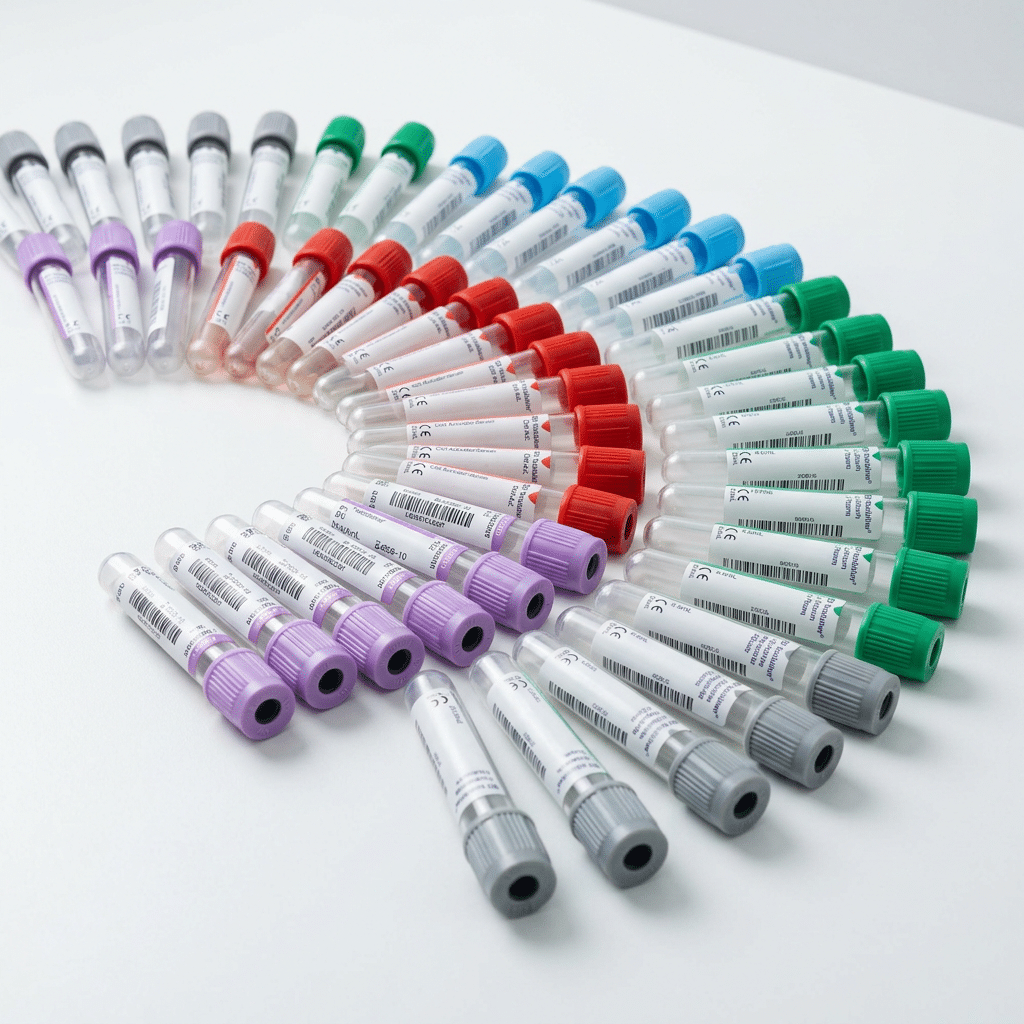
Blood collection tubes are essential tools used in clinical laboratories and medical settings for the collection, transportation, and storage of blood samples. They play a pivotal role in diagnostic testing, allowing healthcare professionals to analyze various blood components accurately.
As medical technology continues to evolve, the demand for reliable and efficient blood collection systems is on the rise. This article provides an in-depth overview of blood collection tubes, focusing on their types, additives, applications, and innovations in technology that impact both clinical practices and investment opportunities in the field.
Types of Blood Collection Tubes
Understanding Color Codes and Their Significance
The color-code system of blood collection tubes is a standardized method for identifying the type of anticoagulant or additive contained within each tube. This system is crucial for ensuring proper specimen handling and enhancing the accuracy of laboratory results. Each color denotes specific additives that affect how blood is processed and analyzed.
Here is a concise breakdown of the blood collection tube colors along with their orresponding additives and primary uses:
| Tube Cap Color | English Name | Additive | Main Use |
|---|---|---|---|
| Red | Plain Tube/Serum Tube | None | Serum biochemistry, Immunology tests |
| Yellow | Serum Separator Tube (SST) | Separator gel + Clot activator | Emergency biochemistry, Hormone tests |
| Purple/Lavender | EDTA Tube | EDTA (K2/K3) | Complete Blood Count (CBC), Cross-matching |
| Light Blue | Coagulation Tube/Citrate Tube | Sodium Citrate (1:9) | Coagulation tests (PT, APTT) |
| Green | Heparin Tube | Lithium/Sodium Heparin | Emergency biochemistry, Electrolyte tests |
| Gray | Glucose Tube/Glycolytic Inhibitor Tube | Sodium Fluoride + Heparin/EDTA | Blood Glucose test |
| Black | ESR Tube | Sodium Citrate (1:4) | Erythrocyte Sedimentation Rate (ESR) |
Understanding these codes allows healthcare professionals to select the appropriate tube for the required tests, minimizing the risk of sample contamination or incorrect results.
Specifications and Sizes of Blood Collection Tubes
| Parameter | Description | Common Values |
|---|---|---|
| Size | Physical dimensions, usually “diameter × length” | 13×75mm, 13×100mm, 16×100mm |
| Nominal Volume | Maximum volume the tube can hold, including additive and blood | 2ml, 3ml, 4ml, 5ml, 6ml, 8ml, 9ml, 10ml |
| Draw Volume | Recommended volume of blood to be collected | Usually same as nominal volume |
| Additive Volume | Amount of liquid or spray additive pre-filled | Varies by tube type and use |
The relationship between size and volume is such that a larger diameter and length indicate greater capacity; however, the precise volume collected is ultimately influenced by the vacuum within the tube.
| Tube Cap Color | Common Size | Common Draw Volume | Remarks |
|---|---|---|---|
| 13×75mm Series | |||
| Purple/Lavender | 13×75mm | 2ml, 3ml, 4ml | CBC tube, mainly short |
| Light Blue | 13×75mm | 2.7ml, 3ml | Coagulation tube, mainly short |
| Black | 13×75mm | 2.4ml | ESR tube, mainly short |
| 13×100mm Series | |||
| Yellow | 13×100mm | 5ml | SST, mainly long |
| Green | 13×100mm | 4ml, 5ml, 6ml | Heparin tube, mainly long |
| Red | 13×100mm | 5ml | Serum tube, mainly long |
| 16×100mm Series | |||
| Yellow | 16×100mm | 8ml, 9ml, 10ml | SST for multiple biochemistry tests |
| Purple/Lavender | 16×100mm | 9ml, 10ml | Combined CBC, blood typing and cross-matching |
| Green | 16×100mm | 8ml, 10ml | Combined emergency biochemistry and electrolyte tests |
| Red | 16×100mm | 10ml | Serum preservation for research or rare disease testing |
When selecting blood collection tubes in a clinical setting, it is essential to choose the correct color (additive) and specification (blood volume) according to the test requirements, as well as the patient’s vein condition and age. In particular scenarios, the 16×100mm large-capacity tube is designed for specialized testing situations that necessitate a significant blood volume, such as blood banks, extensive physical examinations, and research endeavors; however, it is not recommended for use with children or patients who have compromised vein conditions.
The Material Shift: Why PET is the Industry Standard
Advantages of PET Blood Collection Tubes
Traditionally, blood collection tubes were primarily made from glass. However, the shift toward polyethylene terephthalate (PET) has gained significant traction due to its numerous advantages. PET tubes are lightweight, shatterproof, and resistant to chemical interactions, making them a safer option for transportation and storage of blood samples.
Furthermore, PET tubes exhibit a lower likelihood of contamination compared to glass tubes, as they are less prone to leaching of any substances into the blood sample. This characteristic is crucial for preserving the sample’s integrity, especially for sensitive tests. Additionally, PET tubes are often less expensive to manufacture, leading to cost savings for healthcare facilities.
Comparative Analysis with Other Materials
While glass tubes have been a longstanding option in blood collection, their fragility poses risks of breakage and injury during handling. In contrast, PET tubes provide a durable alternative without compromising performance. Additionally, glass tubes require meticulous cleaning and sterilization processes, whereas PET tubes can often be disposed of after a single use, promoting better hygiene practices.
Although there are specific applications where glass tubes may still be preferred, such as in certain specialty tests, the overall trend favors PET due to its enhanced safety profile and reduced costs. The increasing adoption of PET blood collection tubes further impacts investment opportunities in the healthcare materials sector, signaling a shift toward more efficient products.
Conclusion
In summary, blood collection tubes are an integral part of modern diagnostic practices. Their color-coded system helps ensure accurate test results, while the variety of available tubes allows for tailored testing approaches. The shift towards PET tubes represents a significant advancement in material safety and efficiency, which has implications for investment opportunities in the healthcare industry.
Looking ahead, the future of blood collection technology is likely to be shaped by ongoing innovations. Advancements in materials science may lead to the development of even more efficient tubes that further minimize contamination risks. Additionally, automated systems for blood collection and processing could streamline workflows in clinical settings, enhancing both efficiency and accuracy.
F.A.Q.
Frequently asked questions
What is the purpose of different colored blood collection tubes?
The color of a blood collection tube indicates the type of additive it contains. Additives prevent coagulation and facilitate the separation of blood components, making them essential for accurate testing outcomes. Each additive has specific applications based on the type of analysis required.
What are the common sizes of Blood Collection Tubes?
Common sizes of Blood Collection Tubes include 13×75mm, 13×100mm, and 16×100mm, which refer to their physical dimensions.
What criteria should be considered when selecting Blood Collection Tubes?
When selecting Blood Collection Tubes, it is essential to consider the appropriate color for additives, the required blood volume based on test needs, and factors such as the patient’s vein condition and age.
Why is PET preferred over glass for blood collection tubes?
PET (polyethylene terephthalate) is increasingly preferred due to its shatterproof nature, lower contamination risk, and cost-effectiveness compared to traditional glass tubes.