
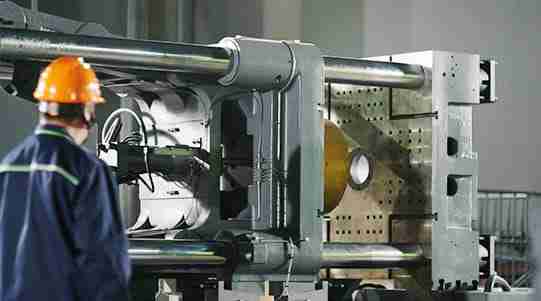
Africa’s plastic manufacturing market is expanding rapidly. From household products and food packaging to PET preforms, bottle caps, crates, agricultural parts, construction accessories, and automotive components, demand for plastic products continues to rise across markets such as Nigeria, Kenya, Ghana, Tanzania, South Africa, Ethiopia, and beyond.
For investors entering the plastics industry, one decision can determine whether a project becomes profitable or problematic: injection molding machine selection.
Choosing the right injection molding machine is not simply about buying the biggest machine, the cheapest machine, or the machine with the highest tonnage. A suitable machine must match the product, mold, raw material, production speed, output target, energy conditions, and long-term service requirements.
A mismatched machine can create serious losses:
This professional guide explains the key factors investors should consider when selecting an injection molding machine, and how each selection point relates to the machine’s technical parameters.
Why Injection Molding Machine Selection Matters
Injection molding machines are long-term production assets. The machine you choose directly affects product quality, electricity cost, production efficiency, maintenance cost, and return on investment.
A poorly selected machine can lead to:
On the other hand, a correctly selected machine helps investors achieve:
The goal of proper injection molding machine selection is simple:
Choose a machine that fully meets production requirements, with reasonable capacity reserve, without unnecessary oversizing.
Key Factors in Injection Molding Machine Selection
1. Start with the Mold: Can the Machine Hold It?
1.1 Tie-Bar Spacing and Platen Size: The Mold Must Fit Physically
Tie-bar spacing is the distance between the four steel tie bars around the mold area. The mold’s outside width and height, or at least the product forming area of the mold, must be smaller than the machine’s tie-bar spacing.
For example, if the mold size is 650 mm × 600 mm, but the machine tie-bar spacing is only 610 mm × 560 mm, the mold cannot be installed properly.
Trying to use a mold that is too large for the machine can cause:
For investors planning to produce different products in the future, it is often wise to choose a machine with slightly larger tie-bar spacing and platen size. This improves flexibility and allows the machine to accept more molds later.
1.2 Mold Height Range: Minimum and Maximum Mold Thickness
Every injection molding machine has a mold height range.
The mold must be within the machine’s:
If the mold is too thick, the machine may not close correctly.
If the mold is too thin, the machine may not lock properly.
For stable and safe production, mold thickness must match the machine specification.
If the mold is too thin, the machine may not lock properly.
For stable and safe production, mold thickness must match the machine specification.
This is especially important for large products such as:
2. Product Removal: Can the Product Come Out?
A mold may fit into the machine, but the finished product must also be removed after molding.
This depends mainly on:
Deep products require special attention.
Examples include:
The 2X Stroke Rule for Deep Products
For deep products, the machine opening stroke should usually be at least two times the depth of the product.
For example, if a bucket is 350 mm deep, the opening stroke may need to be around 700 mm or more, depending on the mold structure and ejection design.
For example, if a bucket is 350 mm deep, the opening stroke may need to be around 700 mm or more, depending on the mold structure and ejection design.
If the opening stroke is not enough, the product may:
For investors, this directly affects productivity and labor cost.
3. Clamping Force: Can the Machine Hold the Mold Closed?
Clamping force is one of the most important parameters in injection molding machine selection.
During injection, molten plastic enters the mold cavity under high pressure. If the machine cannot hold the mold tightly closed, the mold will open slightly and flash will appear on the product edges.
Insufficient clamping force can cause:
Clamping Force Is Related to Projected Area
Many buyers mistakenly select machines only by product weight. In reality, clamping force depends mainly on the projected area of the product, not only its weight.
A thin-wall food container may be light, but because it has a large projected area, it may need relatively high clamping force.
Common products that require careful clamping force calculation include:
Simple Clamping Force Formula
Clamping Force, in tons = Projected Area, in cm² × Material Factor
The material factor is commonly around 0.3 to 0.6, depending on the material and product structure.
The material factor is commonly around 0.3 to 0.6, depending on the material and product structure.
General reference:
The machine must have enough clamping force to prevent flash, but choosing unnecessarily high tonnage also increases cost and energy consumption.
4. Injection Capacity: Can the Machine Fill the Product?
Injection capacity determines whether the machine can inject enough plastic material in one shot.
This is related to:
4.1 The 20%-80% Rule for Shot Weight
To calculate the required shot weight:
Total shot weight = Single product weight × Number of cavities + Runner weight
The machine’s maximum injection capacity should be higher than the total shot weight, but it should not be excessively oversized.
A useful rule in injection molding machine selection is the 20%-80% shot weight rule.
The total shot weight should generally be between 20% and 80% of the machine’s maximum injection capacity.
If the Shot Weight Is Too Small
Using a very large injection unit to produce a very small product may cause the plastic to stay too long in the heated barrel.
This can lead to:
For example, using a 3000 g injection unit to produce 50 g bottle caps is usually not efficient or stable.
If the Shot Weight Is Too Large
If the required shot weight is too close to the machine’s maximum capacity, the machine may work under excessive load.
This can cause:
The right injection capacity gives both stability and efficiency.
4.2 Screw Diameter: Bigger Is Not Always Better
Screw diameter affects both injection volume and injection pressure.
A larger screw usually provides a higher injection volume, but injection pressure may be lower.
A smaller screw usually provides better pressure and control, but injection volume is lower.
A smaller screw usually provides better pressure and control, but injection volume is lower.
Therefore, investors should not simply choose the biggest screw.
Practical guidance:
5. Injection Speed: Can the Machine Produce Fast Enough?
Injection speed is critical for high-output and thin-wall products.
Even if the machine has enough clamping force and injection capacity, slow injection speed may still cause production problems.
Products that need high injection speed include:
If injection speed is too slow, problems may include:
For thin-wall packaging and fast-cycle products, investors should consider high-speed injection molding machines or product specific injection molding machines instead of standard general-purpose machines.
Practical Injection Molding Machine Selection Checklist
Before confirming an order, investors should prepare the following information.
Product Information
Mold Information
Material Information
| Selection Requirement | Main Machine Parameters |
|---|---|
| Mold must fit | Tie-bar spacing, platen size, mold height range |
| Product must come out | Opening stroke, maximum daylight, ejector stroke, ejector force |
| Mold must stay closed | Clamping force |
| Product must be fully filled | Injection weight, injection capacity, screw diameter, injection pressure |
| Machine must inject fast enough | Injection speed, response speed, plasticizing capacity |
| Output must meet target | Cycle time, cavities, automation compatibility |
| Energy cost must be controlled | Servo system, motor power, cooling demand |
| Machine must suit local conditions | Voltage compatibility, cooling system, electrical protection |
| Downtime must be minimized | Spare parts, service engineers, operator training |
Common Mistakes in Injection Molding Machine Selection
Mistake 1: Selecting Only by Machine Tonnage
A 300-ton machine from one supplier may have different injection capacity, tie-bar spacing, screw diameter, and opening stroke from another supplier.
Tonnage alone is not enough.
Tonnage alone is not enough.
Mistake 2: Ignoring Mold Size
Some investors select the machine before confirming mold dimensions. This can lead to serious installation problems.
Mistake 3: Choosing by Product Weight Only
Product weight affects injection capacity, but clamping force depends mainly on projected area.
A light product with a large projected area may still require high clamping force.
A light product with a large projected area may still require high clamping force.
Mistake 4: Ignoring Opening Stroke
Deep products may fit into the machine but still cannot be removed properly if the opening stroke is too short.
Mistake 5: Using a Standard Machine for Thin-Wall Products
Thin-wall products need high injection speed and fast response. A standard machine may produce them slowly or with high scrap rate.
Mistake 6: Buying the Cheapest Machine
A cheap machine may lead to high electricity cost, poor stability, difficult maintenance, and low output.
Mistake 7: Ignoring After-Sales Support
Without spare parts and service support, even a small problem can stop production for days.
Conclusion: The Right Machine Is a Long-Term Profit Engine
For African investors, injection molding machine selection is not only a technical decision. It is a business decision that affects investment return, production cost, product quality, delivery capacity, and long-term competitiveness.
A suitable machine helps your factory reduce waste, save power, increase output, improve product quality, and compete successfully in Africa’s growing plastics market.
If you are looking for reliable injection molding machine selection support, you can contact our technical team today with your product drawings, mold data(if available), material information, and production target. We will help you choose the right machine for stable production and long-term profitability.