
Packaging plays a crucial role in manufacturing, serving not only as a protective layer for products but also as a means of communication with consumers. Effective packaging ensures that goods remain intact during transportation, storage, and display, thus minimizing losses and maximizing consumer satisfaction. In an era where first impressions matter, the packaging design can significantly influence consumer purchasing decisions.
From the water bottle in your gym bag to the salad dressing in your fridge, PET packaging is everywhere. In this article, we’ll break down the basics of PET packaging, the difference between PET preforms and bottles, and why this material has become the global standard for modern manufacturing.
What exactly are PET Preforms and Bottles?
Polyethylene Terephthalate (PET) is a thermoplastic polymer that is widely used in the packaging industry due to its versatile properties. It is a member of the polyester family and is recognized for its strength, lightweight nature, and excellent barrier properties.
Definition of PET Preforms
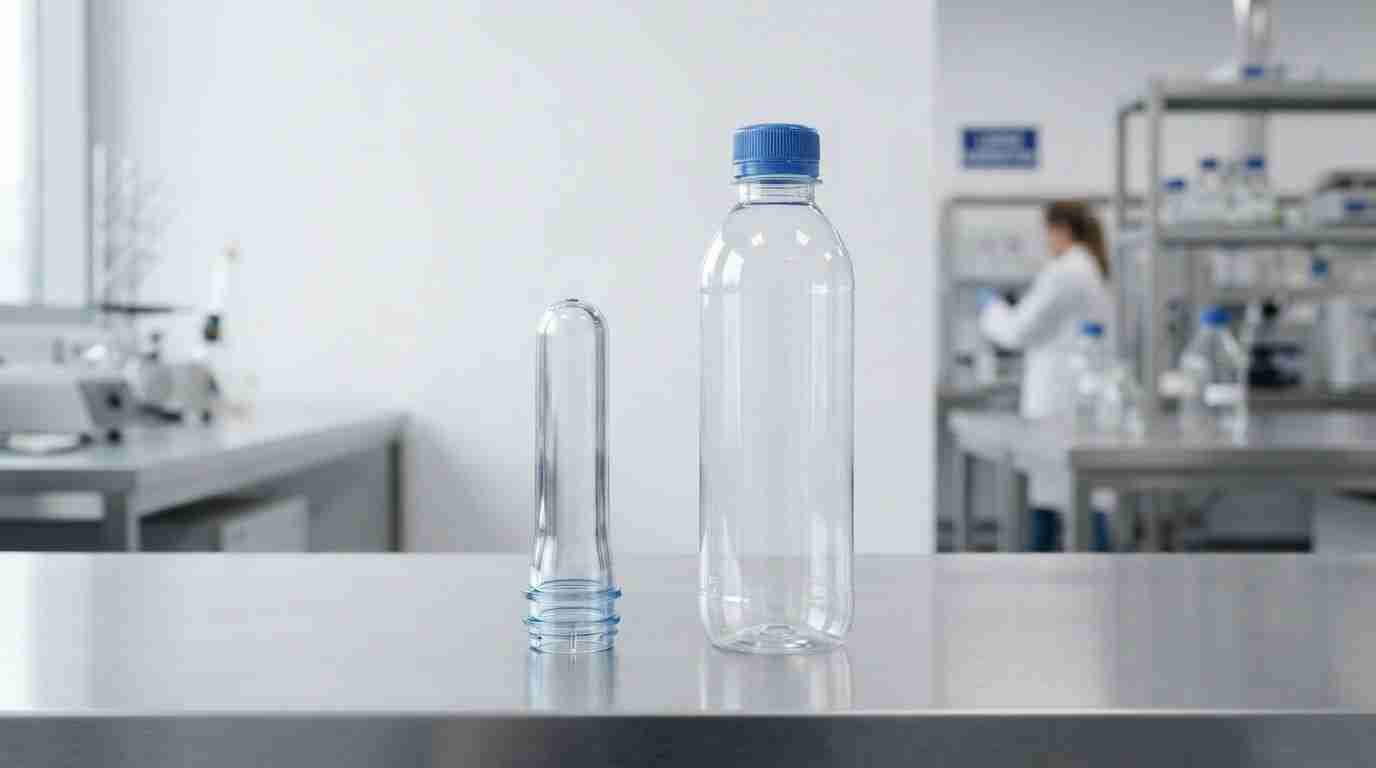
PET preforms are the intermediate product in the production of PET bottles. They are small, test tube-like structures made from PET resin, designed to be molded and expanded into their final shape, which is the bottle. These preforms are manufactured using injection molding, a process that involves melting PET granules and injecting them into a mold to create the desired shape. The resulting preform has a neck finish that is specifically designed to accommodate various types of closures.
The significance of preforms lies in their ability to be easily transported and stored before being transformed into bottles. Their lightweight and space-efficient design reduces shipping costs, making them an economical choice for manufacturers.
Definition of PET Bottles
PET bottles are the final product formed from PET preforms through a process known as stretch blow molding. This process involves heating the preform and using air pressure to expand it into the desired shape of the bottle. PET bottles are widely used for various applications, including beverages, household cleaners, and personal care products, due to their excellent barrier properties that preserve freshness and prevent contamination.
These bottles are available in a variety of shapes and sizes, catering to different market needs. Their lightweight nature, coupled with their strong and shatter-resistant qualities, makes them an ideal choice for packaging consumer goods.
Difference Between PET Preforms and Bottles?
While PET preforms and bottles are made of the same material, they represent two different stages of production:
Why is PET the Gold Standard for Packaging?
Manufacturers and consumers alike prefer PET for several key reasons:
PET packaging is not only practical but also cost-effective. The production processes for PET preforms and bottles are well-established, allowing manufacturers to produce large quantities efficiently. This efficiency translates into lower costs per unit, making PET a fiscally attractive option for businesses. Additionally, the lightweight nature of PET reduces shipping costs, further enhancing its appeal.
The Anatomy of a PET Preform
To the untrained eye, a preform looks simple. However, its design is highly engineered:
The production of PET preforms involves advanced injection molding technology that allows for high precision and efficiency. During this process, the PET resin is heated until it melts and is then injected into a mold to create the preform shape. This technique enables mass production of uniform preforms that can be easily transported and stored until they are ready for the next stage of bottle manufacturing.
Common Applications: Where do we see PET Bottles?
PET bottles find their applications in various industries, notably the food and beverage industry, where they are used to package soft drinks, water, and other liquids. Additionally, they are used in the personal care sector for packaging shampoos, lotions, and other products. Their ability to maintain product integrity while being lightweight and recyclable makes them an essential part of modern packaging solutions.
Common Applications:
Conclusion
In summary, PET preforms and bottles packaging serves as a powerful solution in the modern manufacturing landscape, due to its durability, recyclability, and cost-effectiveness. PET preforms are the essential building blocks for producing PET bottles, which are utilized across various industries, including beverages, food packaging, and personal care products. The ongoing innovations in PET technology and production processes stand to enhance its application and sustainability, making it a cornerstone of effective packaging solutions.
If you are looking for high-efficiency PET preforms and bottles production solutions, you can contact our support team today with your product samples and production targets. We are dedicated to offering steadfast support to fulfill your needs.
F.A.Q.
Frequently asked questions
What are the advantages of using PET for packaging?
PET offers several advantages, including durability, lightweight properties, recyclability, and cost-effectiveness, making it suitable for various applications.
Are PET bottles safe for food and beverage packaging?
Yes, PET bottles are safe for food and beverage packaging as they are made from food-grade materials that meet safety standards.
Can PET be reused?
Yes, PET products can be reused, although it is essential to ensure proper cleaning and maintenance to avoid contamination.